The Drug That Delivers 30% Weight Loss Just Cleared Its Final Trial. There's One Problem: You Can't Get It.
Retatrutide — the "Triple G" injection — just posted the strongest weight-loss results in pharmaceutical history. But with approval still 12-18 months away and supply likely years behind demand, researchers are pointing to a transdermal compound delivery method that flips the exact same metabolic switch. And it requires zero needles or prescriptions.
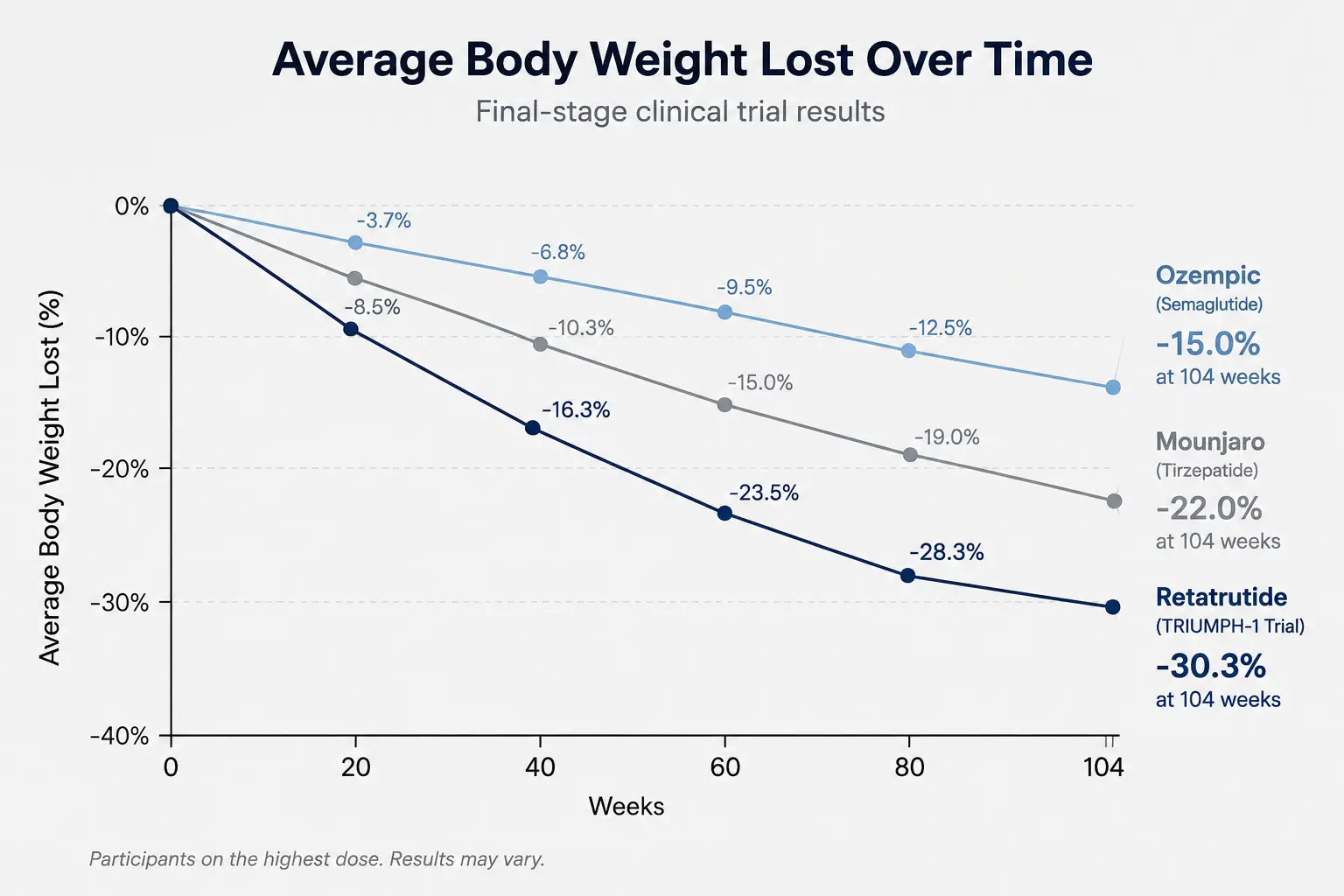
Eli Lilly released the results of TRIUMPH-1 — the final-stage human trial for a drug called Retatrutide. The numbers were staggering: participants on the highest dose lost an average of 28.3% of their body weight over 80 weeks. At 104 weeks, that figure climbed to 30.3%.
To put that in context: Ozempic delivers roughly 15%. Mounjaro reaches about 22%. Retatrutide just matched what stomach-reducing surgery achieves — without a single incision.
Within hours, the story was everywhere. Searches for "Retatrutide" have jumped 512% in a year. Waiting lists are forming at clinics that don't even have the drug yet.
But here's what most of the headlines left out.
The timeline nobody wants to hear
Retatrutide is not approved anywhere. Not in the US, not in Australia, not in the UK. Eli Lilly plans to file for US approval in early 2027. Australia's and the UK's regulators usually follow 6-12 months behind that. Getting it covered by national health systems or subsidised? Likely 2028 at the earliest — and that's the optimistic version.
Even after approval, the supply problem is real. When Ozempic launched, the world ran out of it for over a year. Mounjaro hit the same wall. Retatrutide — which may be in even higher demand than both — is expected to be hard to get well into 2029 simply because there won't be enough of it to make.
For the millions of people who saw those headlines and thought "finally, something that actually works" — the reality is a wait of two to three years. Possibly longer.
The question that matters isn't whether Retatrutide works. The trial proved that. The question is: what do you do between now and the day you can actually get it?
Clinical Trial & Option Comparison
To evaluate where weight loss solutions currently stand, clinical trial data and accessibility factors show a stark contrast between pharmaceutical pipelines and non-prescription alternatives:
| Solution | Hormones/Pathways | Avg Weight Loss | Availability | Side Effects | ThinVeil GLP Patch |
|---|---|---|---|---|---|
| Ozempic (Semaglutide) | GLP-1 Only | ~15% | Shortages / Rx Only | Nausea, Vomiting, GI Distress | |
| Mounjaro (Tirzepatide) | GLP-1 + GIP | ~22% | High Cost / Rx Only | Moderate-Severe GI Distress | |
| Retatrutide (Triple G) | GLP-1 + GIP + Glucagon | ~30.3% | Unapproved (2027-2029) | Nausea, Increased Heart Rate | |
| ThinVeil GLP-1 Patch | AMPK + GLP-1 Support | Steady / Moderate Progress | Available Today (No Rx) | Zero Digestive Nausea | ✓ Active Satiety |
What Retatrutide taught us about why diets fail
To understand why this matters beyond the drug itself, you need to understand what Retatrutide does differently.
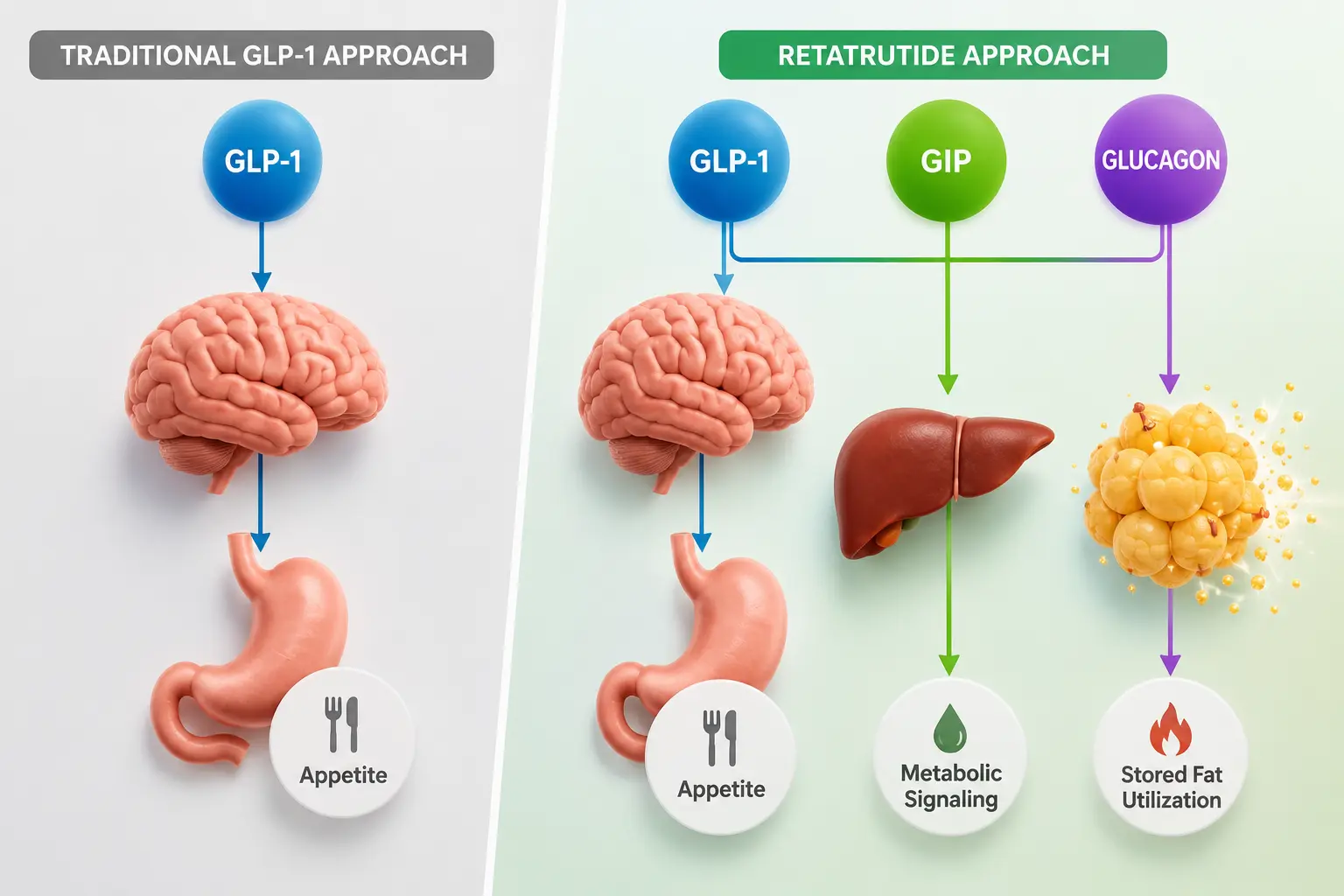
Previous weight-loss drugs — Ozempic, Wegovy, even Mounjaro — work mainly by copying a hormone called GLP-1. GLP-1 slows your stomach down, quiets hunger signals, and reduces what users call "food noise" — the constant background chatter about what to eat next. It works. But it only addresses one piece of the problem: appetite.
Retatrutide targets three hormones at once: GLP-1, GIP, and glucagon. The first two manage hunger and blood sugar. The third — glucagon — does something none of the other drugs attempt. It switches on direct fat burning.
Glucagon tells your body to treat stored fat as fuel it's allowed to spend. It raises the number of calories you burn just sitting still. And it triggers a process called lipolysis — your body breaking open fat cells for energy. This is the "third pathway" that separates Retatrutide from everything before it, and it's the reason the weight-loss numbers are so much higher.
But here's the part that caught the attention of metabolic researchers outside the pharmaceutical industry.
The enzyme that connects the injection to transdermal delivery
Glucagon's fat-burning signal ends up switching on an enzyme called AMPK. Researchers often call it the "master switch" of metabolism. When AMPK is switched on, your body chooses to burn stored fat instead of hoarding it.
Retatrutide flips that switch with a drug. But AMPK and GLP-1 pathways can also be triggered naturally by a precise blend of botanical compounds—including chlorogenic acids and metabolic co-factors—proven in published studies (Onakpoya et al., The Journal of Nutritional Biochemistry).
So why don't traditional weight-loss pills or powders give you these results?
Because oral compounds never actually reach your cells intact.
The digestive breakdown barrier
When you swallow a weight-loss pill or powder, up to 90% of the active compounds are destroyed by harsh stomach acid and liver filtration within minutes. They almost never arrive at your cellular receptors intact. The biological potency is destroyed in the stomach before it ever reaches the bloodstream.
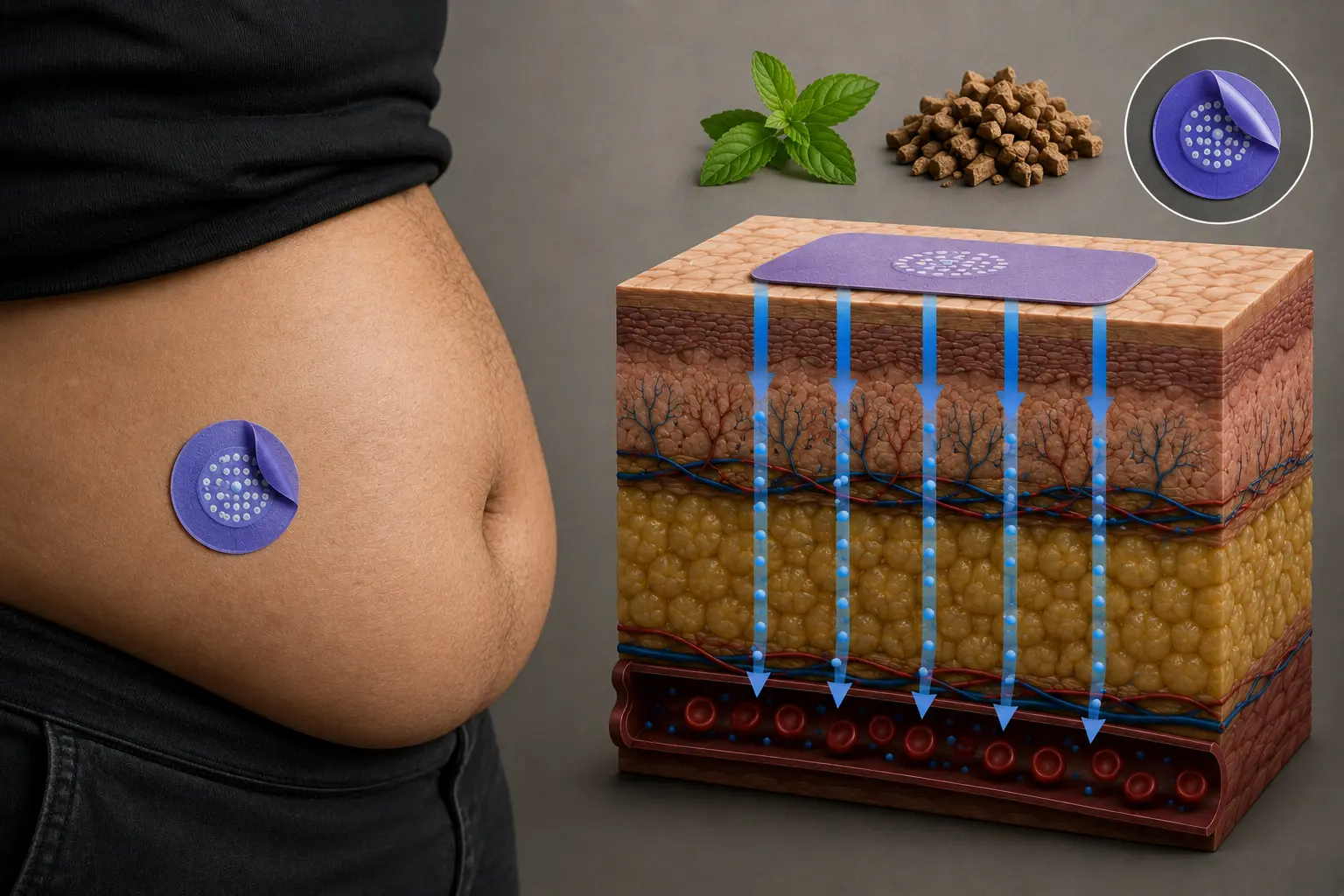
To overcome this, biomedical developers turned to Transdermal Matrix Delivery—the same medical system used for continuous-release hormone and pain treatments.
The result is ThinVeil GLP-1 Transdermal Patches—a thin, discrete patch applied directly to the skin once every 24 hours.
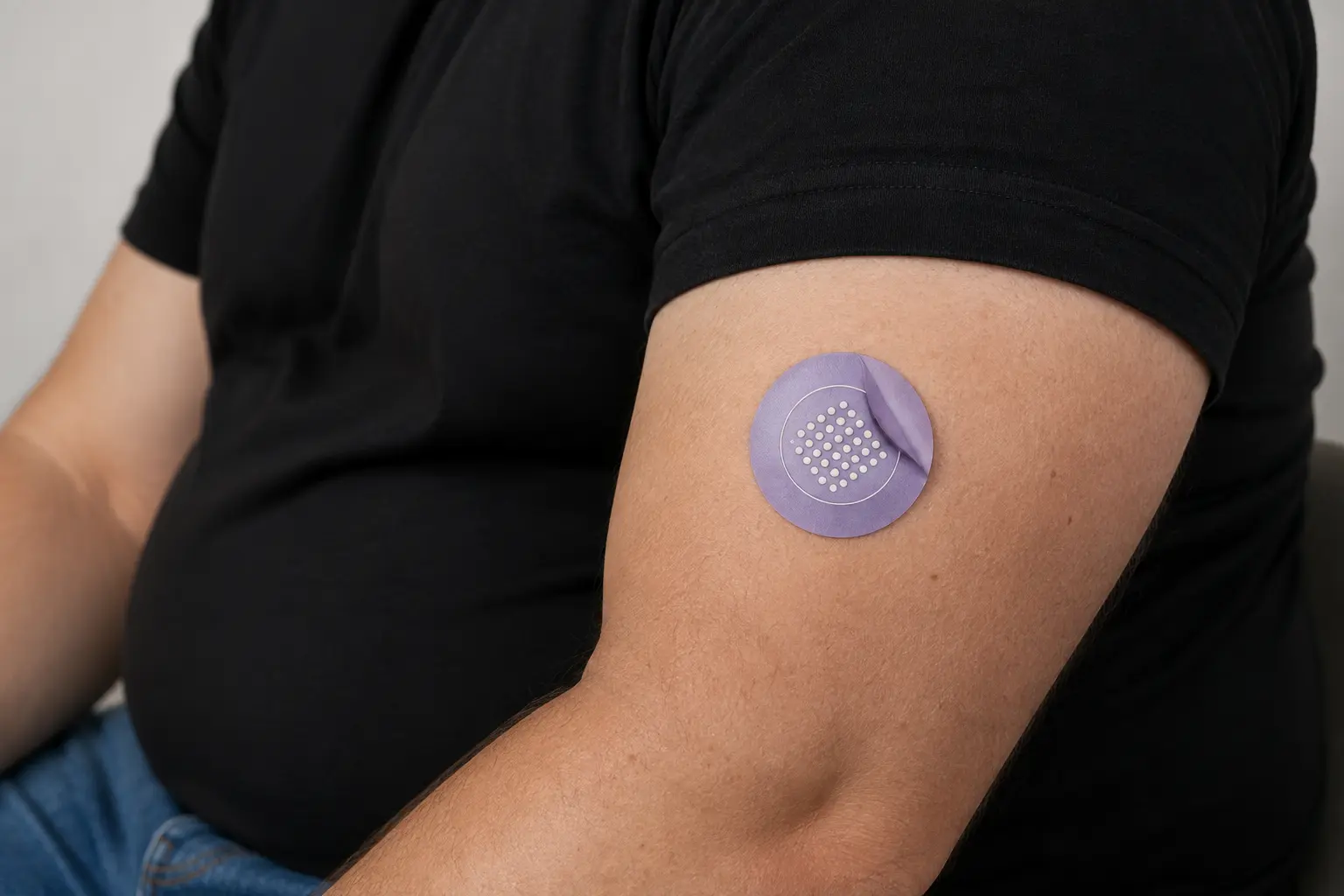
By passing directly through the dermal layers into circulation, ThinVeil bypasses the digestive system completely. Active AMPK-activating and GLP-1 supporting compounds flow continuously into your system over 24 hours without dropping in potency or causing digestive distress.
What it does — and what it doesn't claim to do
To be clear: this is not Retatrutide in a patch.No over-the-counter wellness product can replicate a prescription triple-hormone drug. The transdermal patch mechanism targets the AMPK fat-burning and GLP-1 satiety pathways through a safe, non-prescription route.
What users consistently report:
- The hunger signal quiets: Within the first week, users describe "food noise" fading away—the constant mental loop about what to eat next simply goes quiet. Portions shrink naturally.
- Zero Nausea or Stomach Upset: Because it bypasses the digestive tract completely, you experience no vomiting, cramps, or acid reflux common with injections or pills.
- Steady 24-Hour Release: Instead of sudden hormone spikes and crashes, the patch releases ingredients continuously over 24 hours, preventing late-night cravings.
- Measurable Waistline Response: Over 4–8 weeks, users report noticeable reductions in belly fat and waist measurement as stored fat is drawn upon for daily energy.
Verified Customer Experiences
CLAIM YOUR 70% OFF THINVEIL PROMOTIONAL PACKAGE
Direct reader allocations are currently active. Claim your 60-day risk-free supply while current inventory holds.
CLAIM 70% OFF THINVEIL PATCHES →